 USA
 Austria
 Belgium
 Bulgaria
 Croatia
 Cyprus
 Czech Republic
 Denmark
 Estonia
 Finland
 France
 Germany
 Greece
 Hungary
 Ireland
 Israel
 Italy
 Latvia
 Lithuania
 Luxembourg
 Malta
 Netherlands
 Poland
 Portugal
 Romania
 Slovakia
 Slovenia
 Spain
 Sweden
 Ukraine
Dental Implants for Patients with Autoimmune Diseases: What a New Study Shows
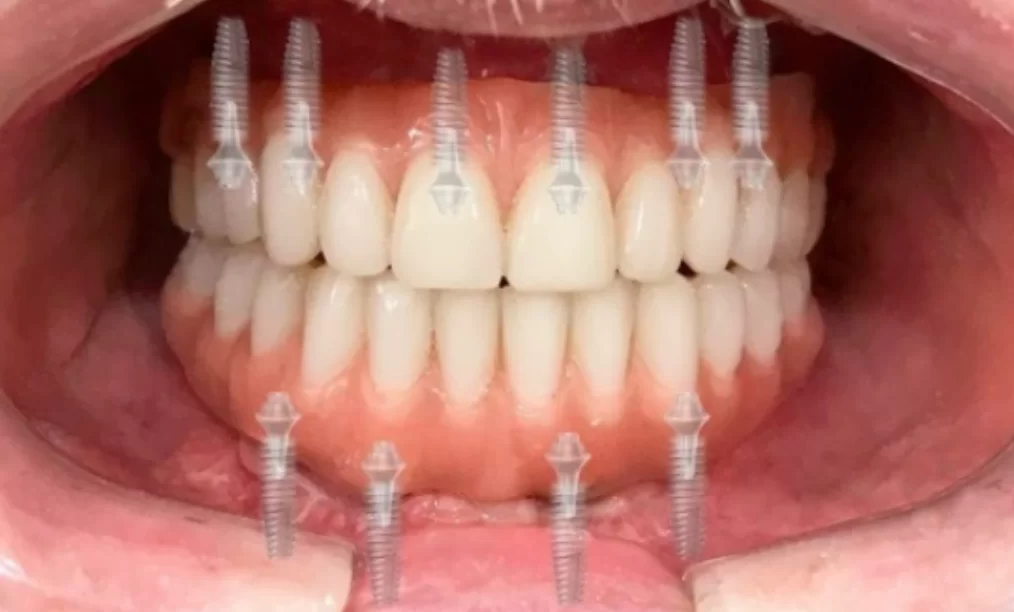
Dental implants are now considered the “gold standard” for replacing lost teeth. However, the situation becomes more complex when a patient is diagnosed with an autoimmune disease (AD), in which the immune system attacks the body’s own tissues. In such cases, the dentist must consider not only the condition of the bone tissue and oral mucosa but also the impact of immunosuppressive therapy.
A recent review published in the journal Clinical Oral Implants Research (Hyldahl et al., 2025) analyzed data on implant survival rates in patients with various autoimmune diseases. The results were encouraging but came with important caveats.
How the Study Was Conducted
- Sources: MEDLINE/PubMed, Cochrane Library and Embase.
- Search date: April 29, 2024.
- Total found: 6,319 publications.
- Selected: 87 studies, mainly case reports and retrospective case series.
- Main focus: implant survival, complications, effects of medication, oral mucosal condition, and quality of life.
The authors emphasized that the level of evidence is low, as the analysis primarily included studies with small sample sizes and no control groups.
Key Results
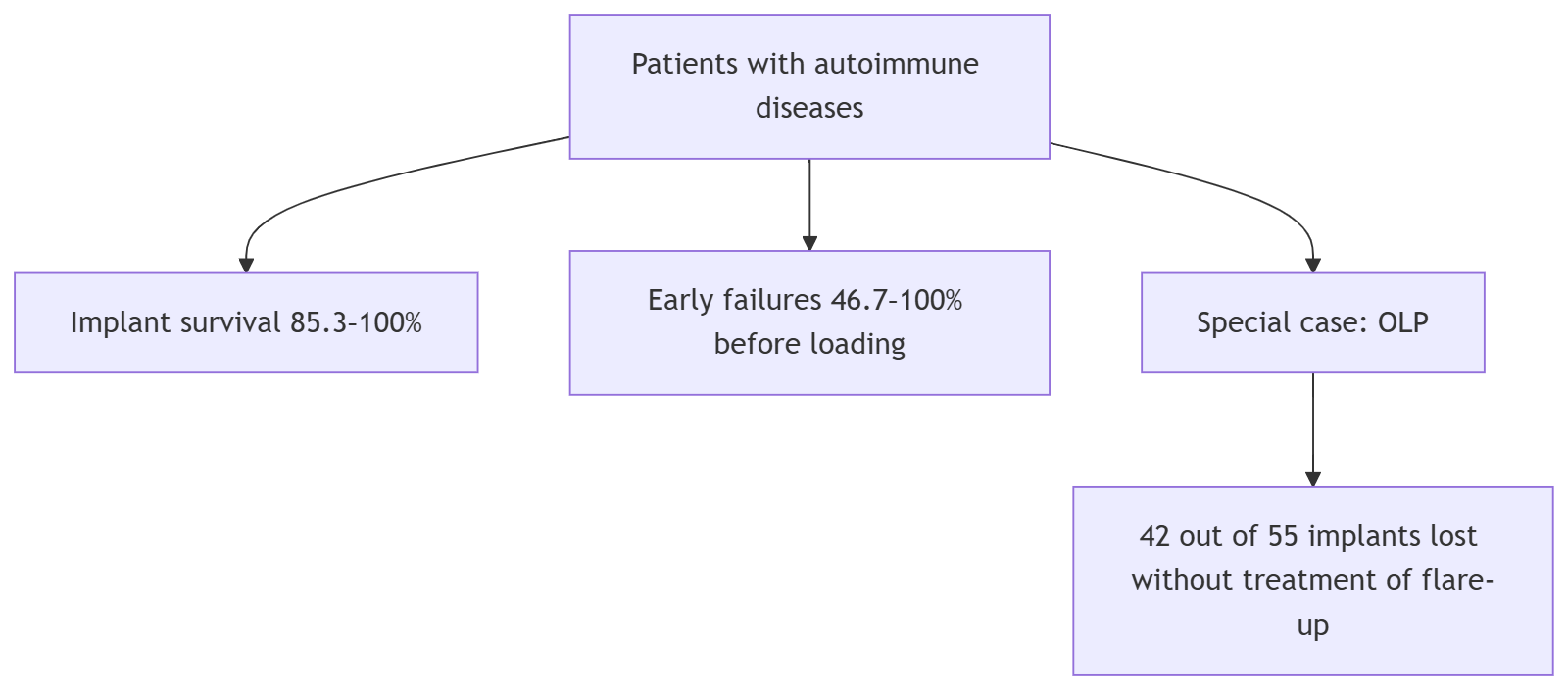
- Implant Survival RatesOverall, survival rates were high, ranging from 85.3% to 100%. This is comparable to the outcomes in healthy patients.
- Early Failures Of the total implant failures, 46.7% to 100% were early losses, occurring before prosthetic loading. This indicates that the initial stage of osseointegration is the riskiest period.
- The Role of TherapyThe most commonly used medications were glucocorticoids. Their use was not found to have a critical impact on implant survival, but potential side effects, such as osteoporosis, remain an important consideration.
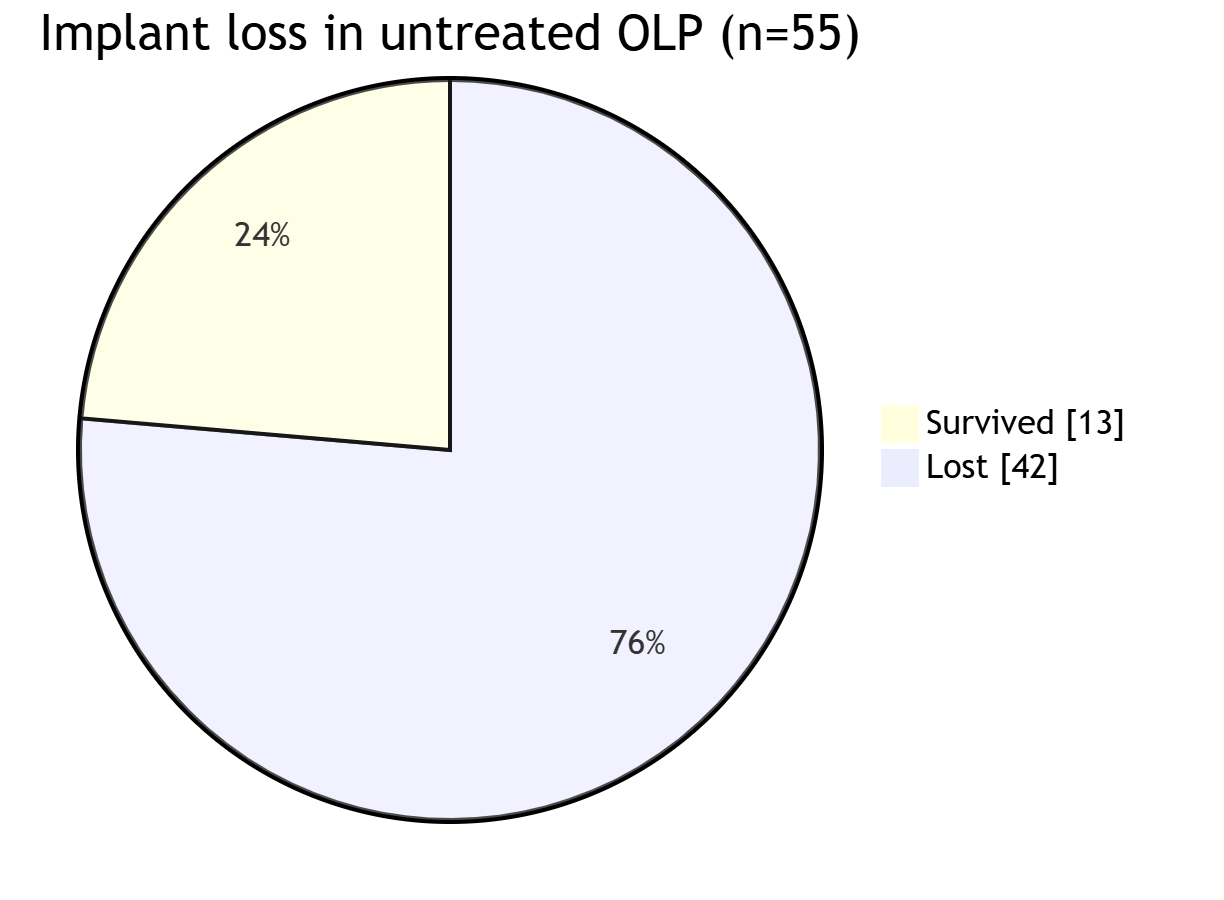
- A Special Case: Oral Lichen Planus (OLP)Implants osseointegrated successfully in patients with controlled disease. However, one study reported a catastrophic result in patients with active, untreated OLP flare-ups: 42 of 55 implants were lost.
Table: Research Statistics
| Indicator | Meaning |
| Studies found | 6,319 |
| Included in the analysis | 87 |
| Overall survival rates | 85.3% – 100% |
| Early failure rate | 46.7% – 100% |
| Most commonly prescribed medications | Glucocorticoids |
| Special case of OLP | 42 of 55 implants were lost (~76.4%) |
Chart: Key Performance Indicators
Additional Visualization: OLP Case
Various Autoimmune Diseases: What Dentists Need to Know
- Oral Lichen Planus (OLP): High risk of failure during exacerbations. Implantation is advisable only when the disease is stable or in remission.
- Systemic Lupus Erythematosus & Scleroderma: Limited data available, but survival rates appear close to normal. It is important to monitor dry mouth and assess oral mucosal health.
- Rheumatoid Arthritis: Implants generally osseointegrate well, but maintaining oral hygiene can be challenging due to joint damage. Specialized care instructions and aids are required.
- Pemphigoid & Pemphigus: Limited research exists; associated with a high risk of complications. Implantation should only be considered during periods of remission.
- Long-term Glucocorticoid Therapy: Does not critically increase the risk of implant failure but can affect bone density. It is advisable to extend the osseointegration period.
Practical Implications for Dentists
- Disease Activity Assessment. Before implantation, it is crucial to confirm that the autoimmune disease is in remission. This is especially important for patients with OLP.
- Monitoring Healing in the Early Stages. Most implant losses occur before loading. Therefore, the first few months after placement are a critical period for monitoring.
- Patient Medication Profile. Glucocorticoids are not an absolute contraindication but warrant careful consideration of bone quality and osseointegration time.
- Personalized Oral Hygiene Protocols. Patients with rheumatoid arthritis and other conditions that limit mobility require specialized oral hygiene instructions and aids.
- Informed Consent. The patient must understand that the risks are higher than for a healthy individual, especially when the disease is in an active phase.
Conclusion
The review by Hyldahl et al. (2025) demonstrates that dental implantation in patients with autoimmune diseases is generally feasible and has a high survival rate. However, the risk of complications increases significantly with active oral mucosal inflammation, particularly in cases of oral lichen planus. Most failures occur early, prior to prosthetic treatment.
For practicing dentists, this underscores one key point: treatment success depends on a multidisciplinary approach. Monitoring disease activity, collaborating with a rheumatologist or dermatologist, providing close postoperative monitoring, and creating personalized hygiene recommendations are all essential for long-term success.